
Free sample questions
2 questions from this set, shown in full with the correct answer and the reasoning behind it. Read them as a study resource.
Q1.A dial indicator is set against a shaft, and the shaft is turned one full revolution. Each division on the dial is mm and one revolution of the pointer is mm. The pointer swings between the two positions shown and goes no further.
What is the total indicator reading?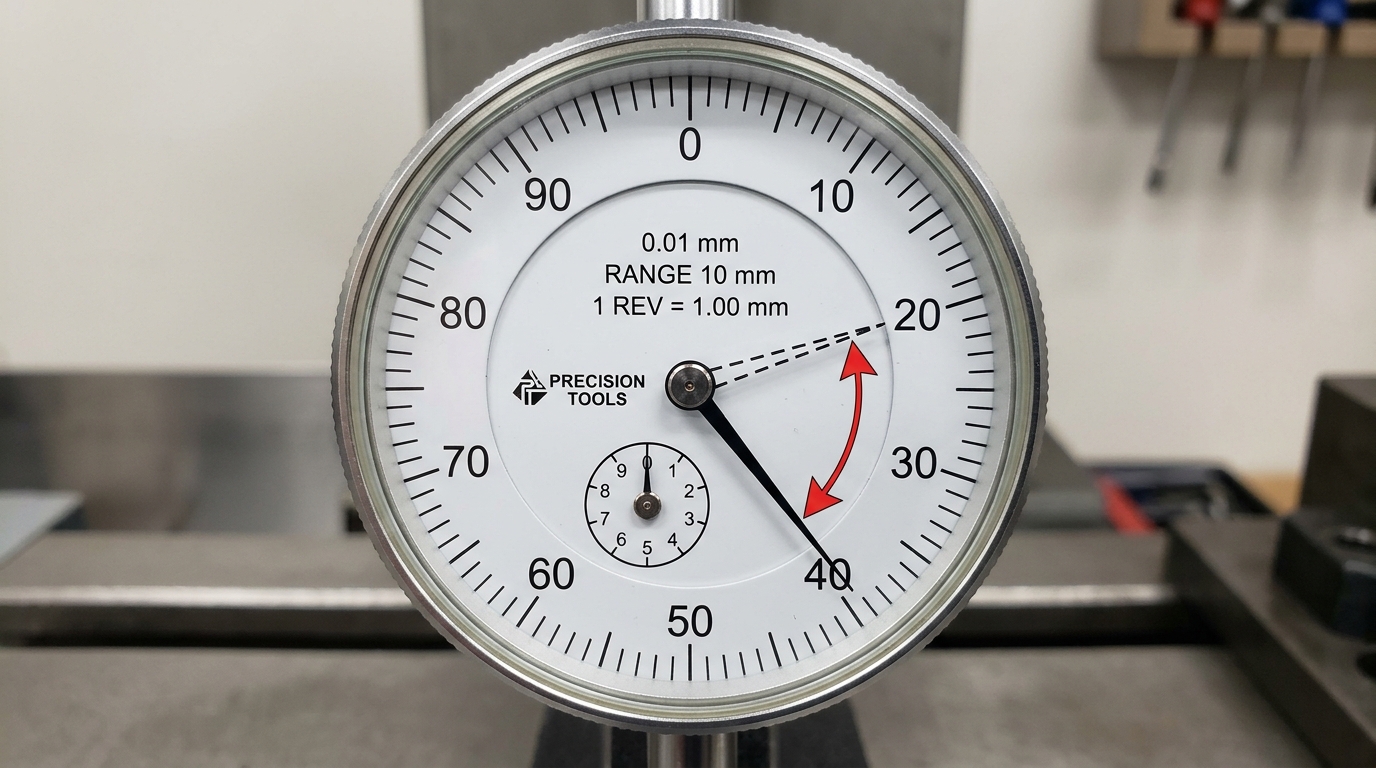
- A. mm
- B. mm✓ Correct answer
- C. mm
- D. mm
Explanation
Total indicator reading is the swing of the pointer in one full turn of the part, so it is the highest reading minus the lowest reading:
Substituting the two marked positions, each division being mm:
mm is only the highest reading, not the swing between the two.Reference: CQT BoK III
Q2.A calibration technician wrings three gauge blocks into the stack shown below and stands it on a surface plate to set a height gauge.
What height does the stack set?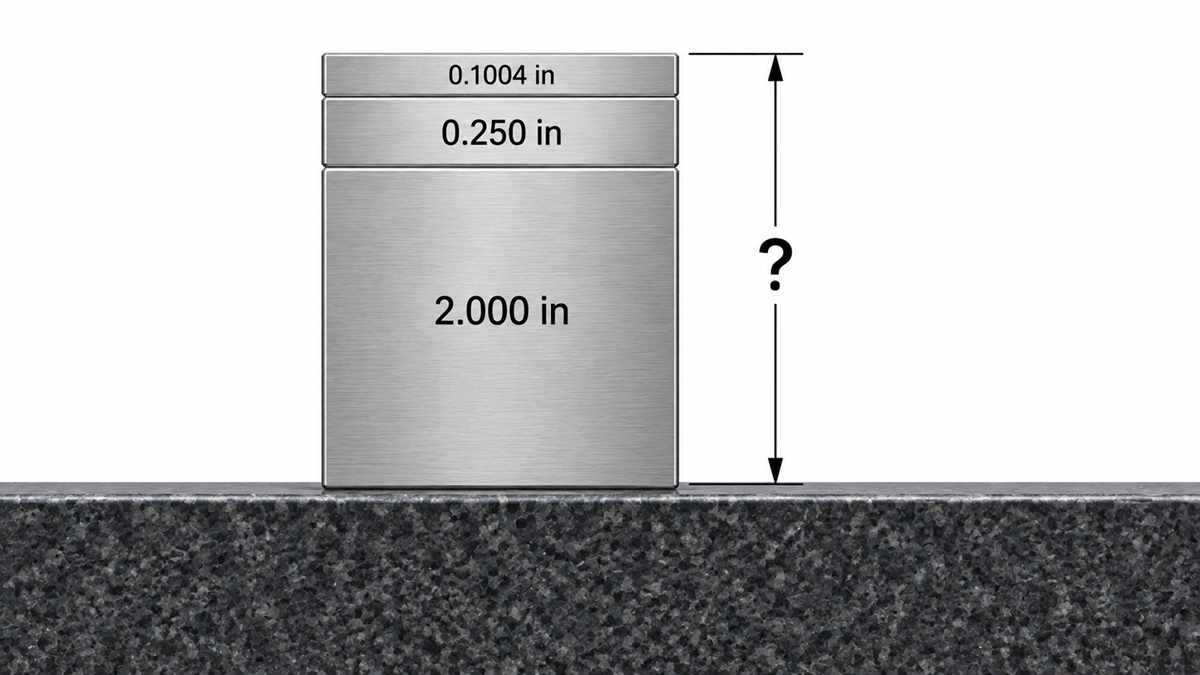
- A. in
- B. in
- C. in
- D. in✓ Correct answer
Explanation
Wrung blocks behave as one solid block, so the height of the stack is the sum of the sizes of the blocks in it:
Substituting the three printed sizes:
in leaves out the in block. in comes from writing the last two digits of the thin block the wrong way round, which is an easy slip on a four place size.Reference: CQT BoK III
Want the other 23 questions in CQT - 3. Metrology and Calibration?
How well do you understand Metrology and Calibration
- 25 exam-style CQT questions focused on Metrology and Calibration
- Full explanation for every question
- Mobile friendly, no install required
- Instant feedback as you answer
Strengthen Your Understanding of Metrology and Calibration
Preparing for the ASQ Certified Quality Technician (CQT) exam?
This paid 25-question practice quiz focuses specifically on Metrology and Calibration, Section III of the CQT Body of Knowledge.
The questions include a practical mix of:
- Measurement terminology and basic metrology concepts
- Accuracy, precision, resolution, and sensitivity
- Bias, repeatability, and reproducibility
- Measurement uncertainty
- Calibration principles
- Calibration intervals
- Traceability to recognized standards
- Measurement standards and reference standards
- Selection of appropriate measuring instruments
- Vernier calipers, micrometers, height gauges, and indicators
- Surface plates and comparators
- Gage blocks and master standards
- Care, handling, and storage of measuring equipment
- Environmental effects on measurement
- Out-of-calibration conditions
- Calibration records and status identification
- Measurement system variation
- Practical inspection and calibration scenarios
- Plausible distractors based on common misunderstandings
Learn from Every Question
This quiz is offered in Review Mode, so you will see the correct answer and a clear explanation immediately after each response.
Each explanation helps you understand:
- Why the correct answer is right
- Which metrology or calibration concept is being tested
- Why the other options are less appropriate
- How the concept applies in a practical quality technician situation
- How similar concepts may appear in a CQT-style question
The goal is not simply to check your score. It is to help you understand how measurement systems, calibration practices, instrument selection, traceability, and measurement variation support reliable inspection and quality decisions.
Part of the Paid CQT Practice Package
This 25-question quiz is included in the complete CQT Practice Test Package.
Use it to:
- Strengthen your understanding of metrology fundamentals
- Distinguish accuracy, precision, bias, and resolution
- Select suitable measuring instruments
- Understand calibration and traceability requirements
- Recognize environmental influences on measurement
- Interpret out-of-calibration situations
- Apply measurement concepts to practical inspection scenarios
- Improve your readiness for the CQT exam
Ready to Test Your Metrology and Calibration Knowledge?
Complete the 25-question Review Mode quiz and use every incorrect answer as a guide for further study.
Start the CQT Metrology and Calibration Practice Quiz
What this quiz covers
- Metrology and Calibration
Questions about this practice test
Related CQT practice tests
- CQT Free Practice Questions (Review Mode)25 practice questionsReviewFreeView quiz
- CQT Full 100 Randomly Drawn Questions Mock Exam (240 Minutes)100 practice questionsExam · 240 minView quiz
- CQT Free Mock Exam (60 Minutes)25 practice questionsExam · 60 minFreeView quiz
- CQT - 1. Quality Concepts and Tools25 practice questionsReviewView quiz
Want the full course, not just the questions?
Quality Gurus video courses cover the whole body of knowledge with worked examples, templates and downloadable notes — taught by Sandeep Kumar.
Browse Quality Gurus courses